

Empower your team to move faster and deliver more strategic impact with AI-driven automation
Procurement is entering a new era. What was once a back-office, transactional function is rapidly becoming a strategic engine for innovation, resilience, and competitive advantage. Artificial intelligence (AI) is at the centre of this shift. By automating routine tasks, analyzing massive amounts of data, and delivering real-time insights, AI is helping organizations make smarter, faster, and more confident sourcing decisions.
Today, leading procurement teams are already using AI to improve spend visibility, strengthen supplier relationships, and reduce risk. But this is only the beginning.
AI technologies already in widespread use in procurement
Machine Learning (ML)
Using historical data (spend, supplier performance, lead times) to predict outcomes or spot patterns.
Natural Language Processing (NLP)
Analyzing contracts, emails, supplier documents to extract key terms, clauses, risks.
Robotic Process Automation (RPA)
Automating rule-based tasks (e.g., invoice processing, PO reconciliation) often in tandem with AI.
Optical Character Recognition (OCR)
Converting scanned invoices, receipts, paper docs into digital text for analytics and automation.
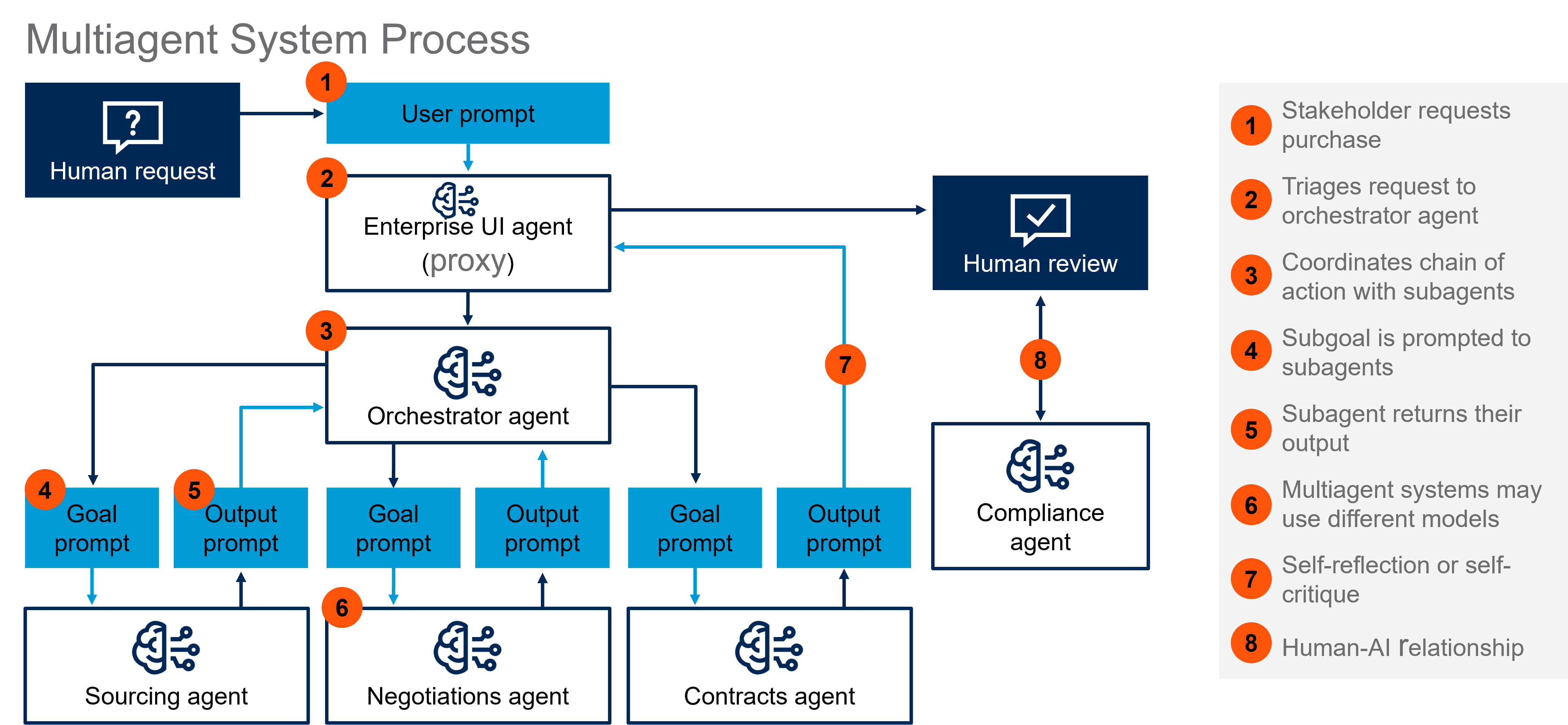
The shift to Agent-to-Agent interaction will enable entire processes to be automated
The next generation of AI — including generative technologies and autonomous agents — will take procurement to a new level of intelligence, where systems can interact together to anticipate needs, negotiate on behalf of the business, and adapt instantly to market changes.
Multi-agent systems (MAS) offer a revolutionary approach by using autonomous, intelligent agents to manage entire procurement tasks—from demand forecasting and supplier selection to contract execution and payment—without human intervention. By enabling real-time negotiation, coordination, and decision-making among digital agents, MAS can transform procurement into a fully automated, agile, and transparent process that drives both operational efficiency and strategic advantage.
Important Topics Covered
Overcoming the barriers to AI adoption in procurement – How can organisations address common concerns such as incomplete or fragmented data, governance and risk management, and the absence of clear frameworks or standards?
Framing the right AI use cases in procurement – With many potential applications for agentic AI, how should organisations prioritise where to start? What criteria help determine the highest-value and most feasible use cases?
Kickstarting your AI journey in a controlled way – What practical steps can procurement teams take to begin? From conducting an initial capability self-assessment and defining clear objectives, to launching a safe, well-governed pilot programme.
Watch a recording of our recent webinar
Accurate data is the key to smarter AI procurement
The effectiveness of these AI tools hinges on one critical factor: accurate and complete data. High-quality data enables AI to analyze supplier performance, forecast demand, detect risks, and uncover cost-saving opportunities with precision.
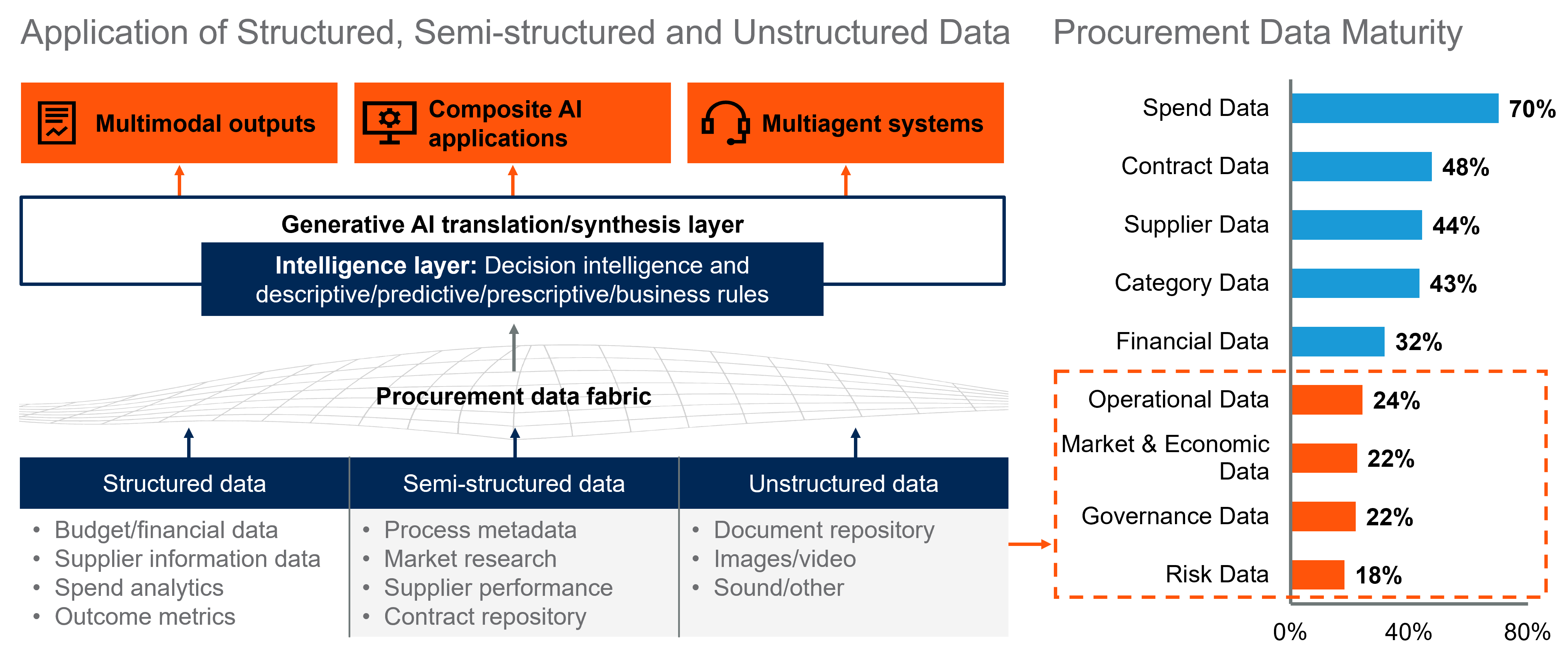
Without reliable data, even the most advanced AI systems can produce flawed insights, leading to missed opportunities and inefficiencies. Ensuring your procurement data is accurate, comprehensive, and up-to-date is essential to unlocking the full potential of AI-driven procurement. AI agents also require all data types, however the current data maturity presents a significant challenge.
How to Set Up a Procurement AI Strategy That Actually Delivers Value
Many organizations rush into tools and pilots without a coherent strategy, leading to fragmented solutions, low adoption, and unclear ROI. A strong procurement AI strategy is not about chasing the latest technology. It’s about aligning AI capabilities with procurement’s core objectives: cost efficiency, resilience, compliance, and value creation.
Adopting our structured procurement AI strategy framework helps organizations move from experimentation to impact. It provides a disciplined way to prioritize use cases, align AI investments with procurement objectives, and ensure that data, processes, and people are ready to support new capabilities.
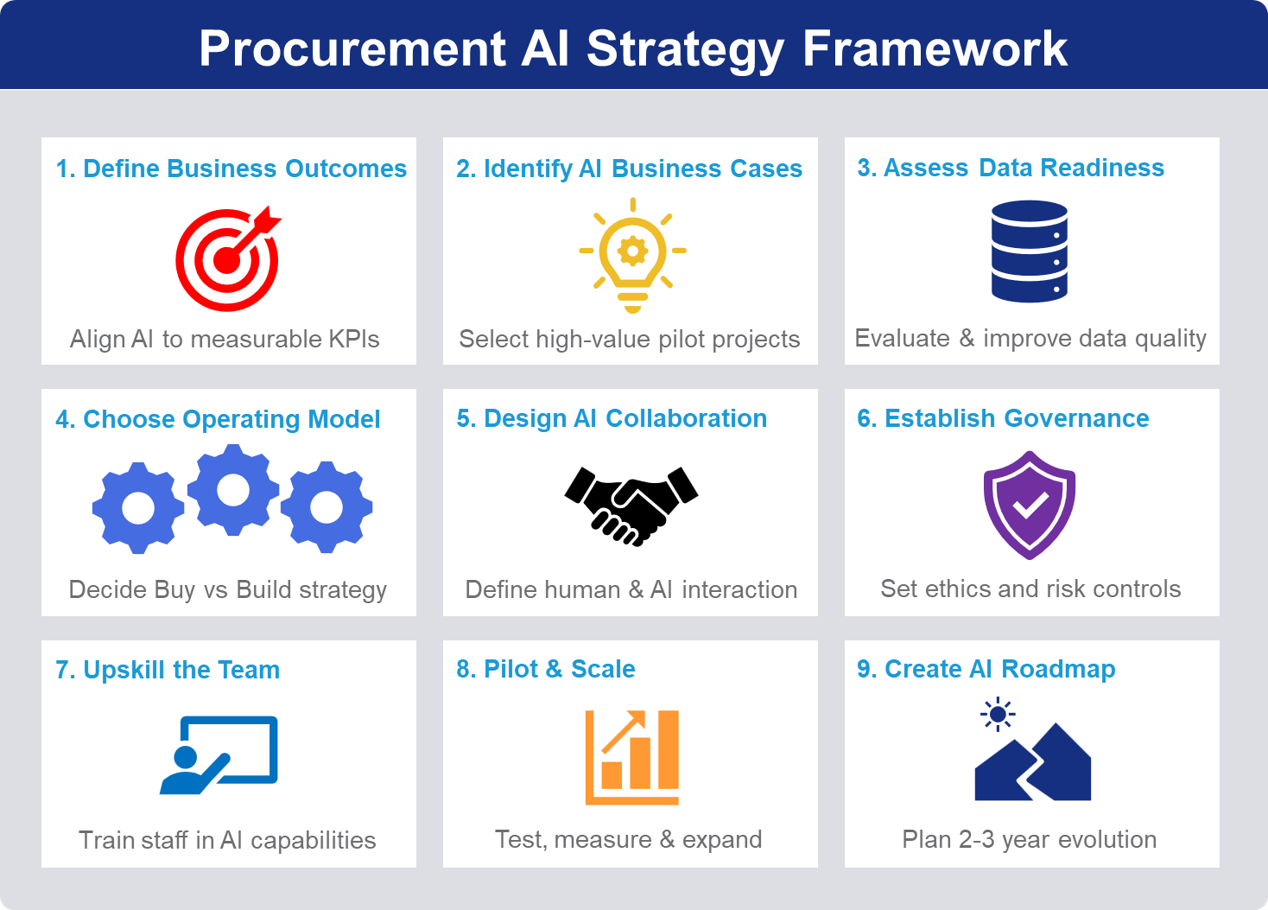
Instead of reacting to vendor pitches or chasing the latest AI trend, procurement leaders gain a repeatable method for deciding what to adopt, what to defer, and what to avoid altogether.
The benefit is not simply better tools. Organizations that apply a coherent procurement AI strategy framework typically see faster time to value, higher user adoption, clearer ROI, and greater confidence from stakeholders.
AI becomes a capability that strengthens procurement’s strategic role — improving decision-making, resilience, and value delivery — rather than a series of disconnected technology experiments.
Develop your AI strategy by using our AI Use Case Priotization Model
Investing early in AI capabilities positions businesses to stay ahead of competitors, adapt to evolving market demands, and capitalize on emerging opportunities. However, with such a broad spectrum of use cases available, where should you start?
At excelerated, we have adopted an AI Use Case Priorization Model to help focus your strategy on driving the highest return on investment. Initially, we work with you to create a Use Case Balanced Scorecard, which assesses each AI use case against both business value and feasibility.
The results of the balance scorecard are then plotted on the Prioritization Map, which segments each use case into Likely Wins, Calculated Risks and Marginal Gains, helping you create your AI roadmap.
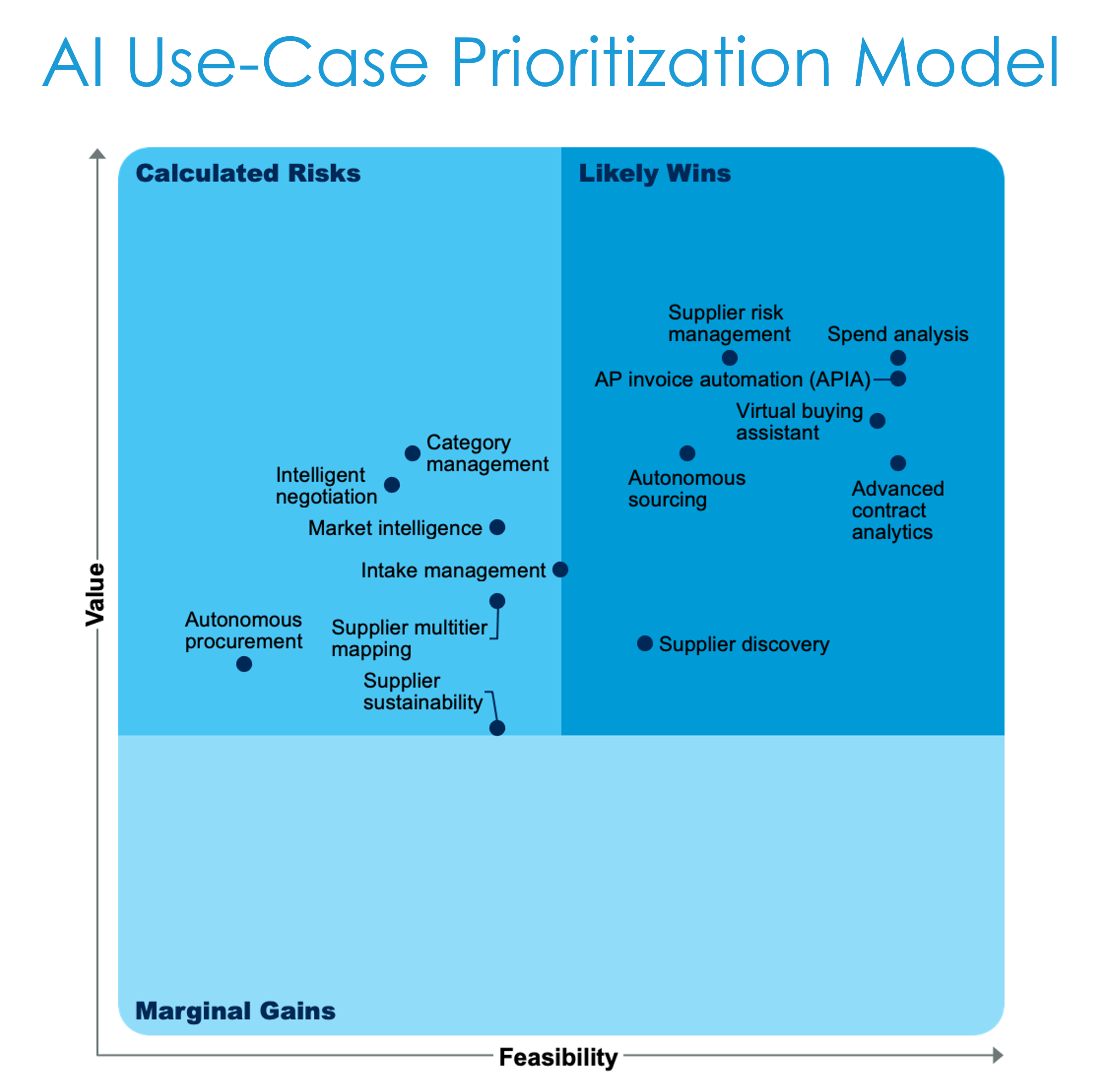
AI is an enabler of specific use cases for sourcing and procurement. This Use-Case Comparison plots these use cases against business value and feasibility axes, inviting strategic conversations and driving investment decisions.
Review the AI use cases plotted on the graphic, comparing them with the maturity and requirements of your own procurement organization.
Likely Wins offer a great combination of high feasibility and high business value.
Calculated Risks offer high business value but low feasibility.
Marginal Gains are highly feasible but offer low business value.