

Make smarter, faster procurement decisions backed by actionable data-driven insights
Beyond efficiency, clean data ensures transparency and compliance, building trust with stakeholders and supporting informed decision-making. When procurement is powered by data you can trust, it transforms from a reactive, transactional function into a proactive, strategic partner—driving measurable value across the organization.
Tangible Business Outcomes Delivered by Clean and Accurate Data
Procurement Cost Savings
5–15% through spend consolidation & negotiation
Supplier Base Rationalization
10–30% reduction in redundant suppliers
Invoice Processing Costs
20–50% reduction via automation & clean data
Audit Preparation Time
Up to 50% faster due to clean, traceable data
The Strategic Importance of Supplier, Material, and Spend Data in Modern Procurement
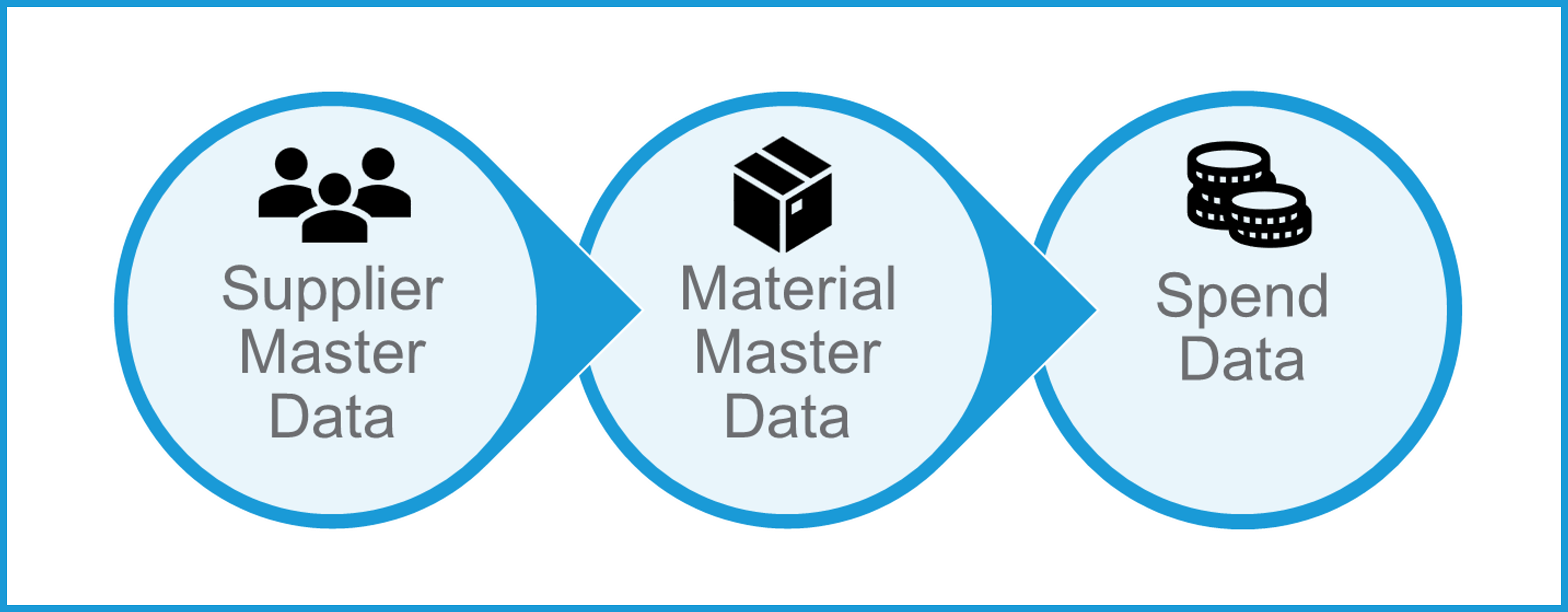
Supplier Master Data
3 Steps to achieving clean and accurate Supplier Master Data
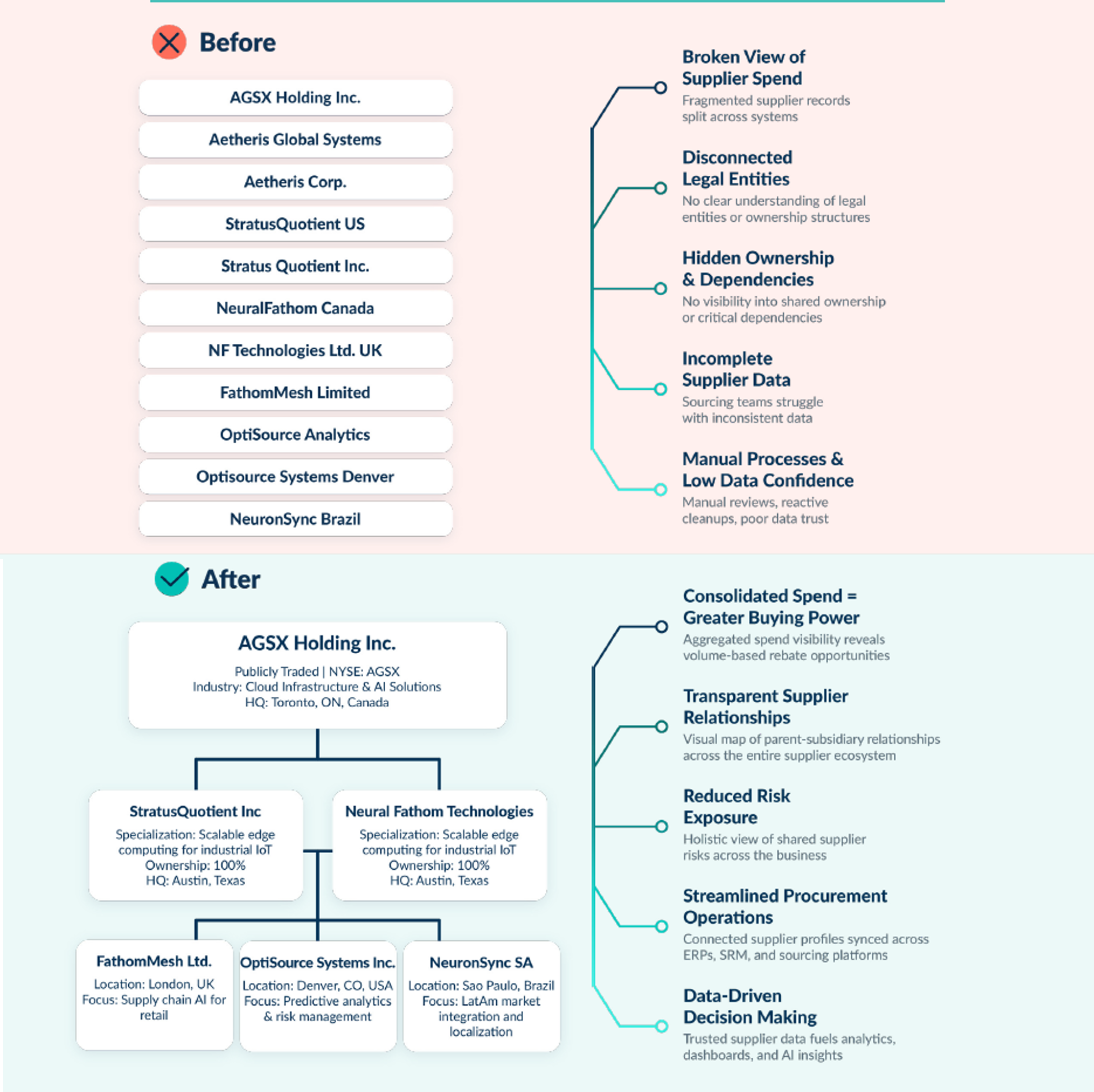
Supplier relationship mapping turns disjointed records into a reliable, intelligent foundation that procurement teams can use to move faster, negotiate smarter, and reduce risk. Accurate roll-ups also help identify consolidation opportunities and ensure teams qualify for volume discounts and rebate tiers that would otherwise be missed.
Eliminate Duplicate Data
Automatically identify and merge duplicate supplier records into a single, complete profile – leveraging legal entity resolution and verified government and commercial data to eliminate inconsistencies like name variations, address mismatches, and duplicate IDs.
Target Attribute Enrichment
Many supplier records lack the depth of information needed for modern procurement operations. Supplier profiles can be automatically enriched with 30+ attributes, including NAICS/SIC codes, tax IDs, diversity certifications, goods and services classifications, and more, based on your business priorities.
Material Master Data
Harmonizing your material master data provides a unified visibility of all data across your systems, dramatically reducing human effort and providing substantial savings by reducing working capital and management costs, delivering improvements across your entire value chain.
How technology can help you build a trusted data foundation
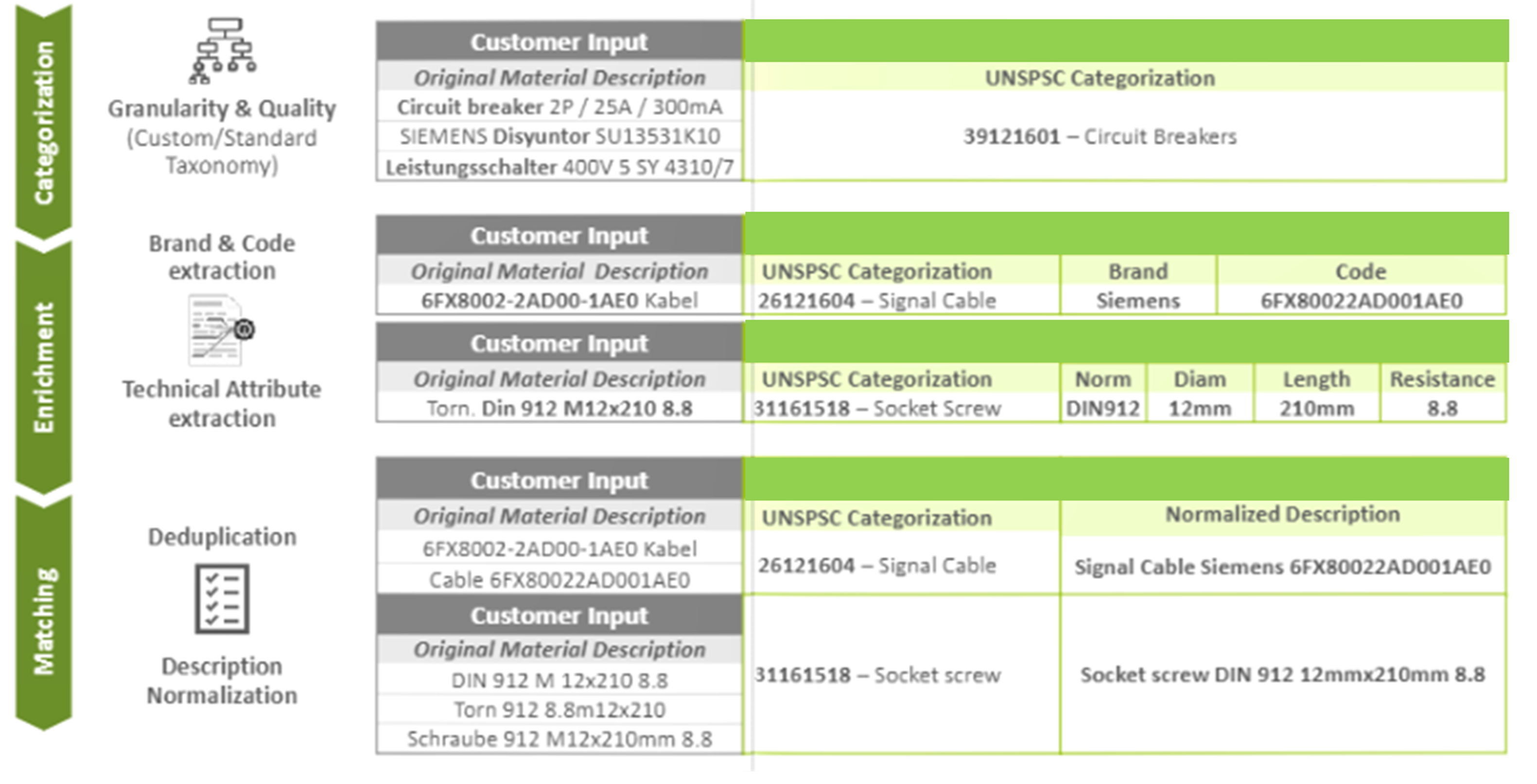
Merge master data from across multiple internal systems into single items, utilizing uniform structures, definitions, and formats for material data across the entire organization, ensuring everyone uses the same “language”.
Smart Material Creation
Automatically check if the new material item you are creating already exists, and if not, guide you through the system to create the item in the correct manner, aligned to the standardized structure.
Spend Data
How technology can help cleanse and optimize your spend data
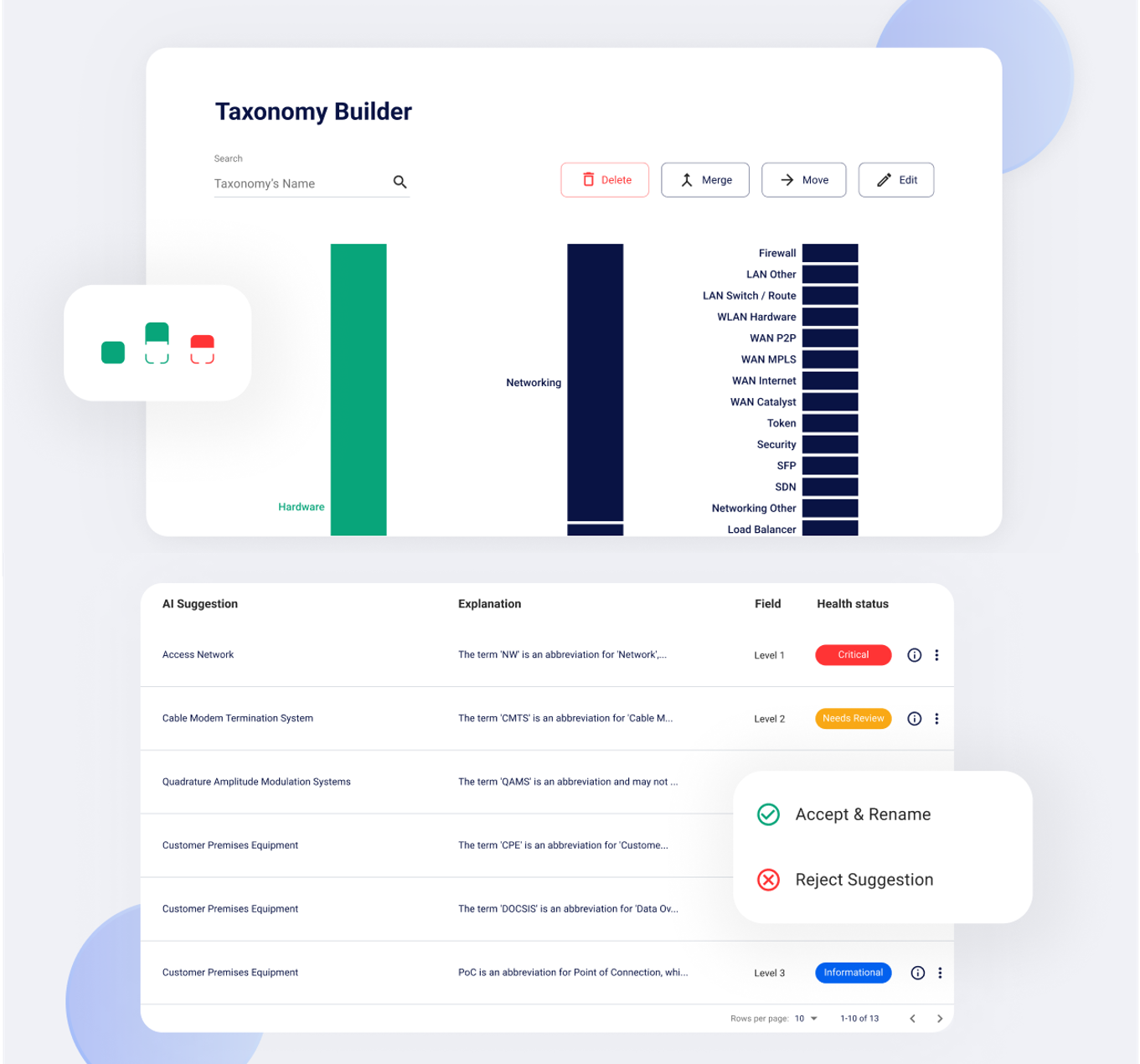
AI agents can assist organizations in building and refining your procurement taxonomy – a hierarchical structure that categorizes all spend transactions. This customized taxonomy serves as the backbone for spend analysis, enabling procurement teams to slice and dice data effectively.
Automated Dpend Categorization
Natural language processing (NLP) and large language models (LLMs) can automatically classify spend data with over 97% accuracy. This process ensures that all transactions are consistently categorized, facilitating comprehensive spend analysis and reporting.
Data Enrichment with Key Attributes
Enrich your spend data by adding essential attributes such as contract references, payment terms, and invoice details. This enrichment provides a deeper understanding of spend patterns and supports strategic decision-making.