

The mandate starts in 2029.
The decisions that shape your compliance start today.
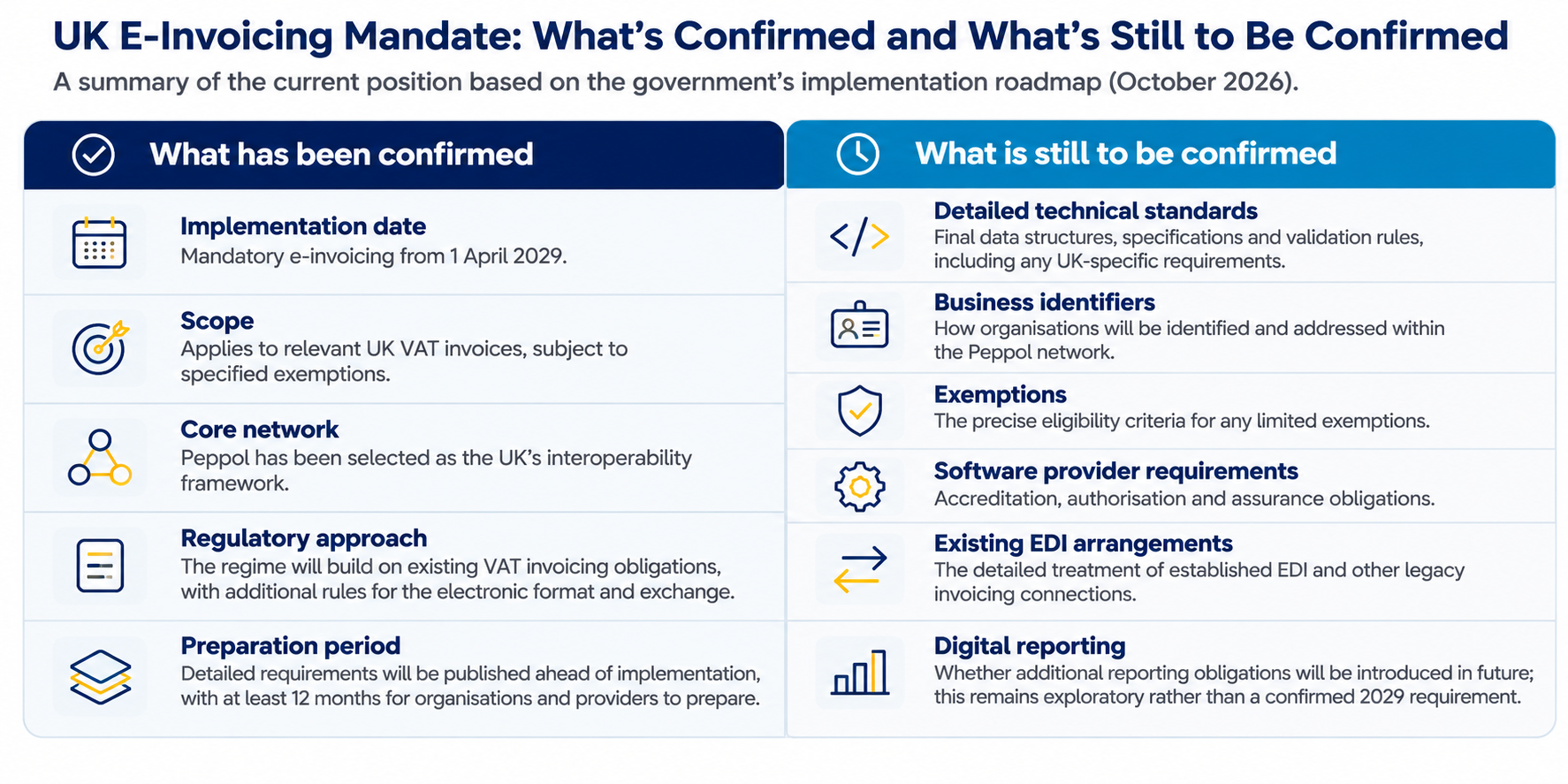
From 1 April 2029, UK VAT-registered organisations will be required to issue and receive VAT invoices electronically in a structured format, subject to applicable exemptions.
While the government is still finalising the detailed requirements, the direction is clear. Organisations need to consider how their existing ERP, Accounts Payable and invoicing systems will support compliance.
For those planning ERP migrations or investing in AP automation, the implications are particularly important. Technology decisions made today could determine whether compliance becomes a straightforward extension of existing capabilities or a costly retrofit.
What is changing, and when?
A fundamental shift in how UK businesses exchange invoices
The UK government has confirmed that mandatory electronic invoicing will be introduced from 1 April 2029, bringing a significant change to the way VAT invoices are issued and received.
Unlike simply emailing a PDF invoice, e-invoicing involves the direct exchange of structured invoice data between business systems, enabling invoices to be received, validated and processed electronically.
The government has confirmed that Peppol will be the core interoperability framework for the UK, enabling different software systems to exchange invoices through a common network
The road to April 2029
The government published its implementation roadmap on 28 October 2026, providing greater clarity on the requirements and the timetable for final decisions. Although the final technical requirements are still being developed, organisations should not wait until 2028 to understand the implications for their existing systems.
The immediate priority is not to implement against standards that have yet to be finalised. It is to assess current capabilities, identify potential gaps and ensure that technology investments being made today do not create unnecessary complexity when the requirements become mandatory.
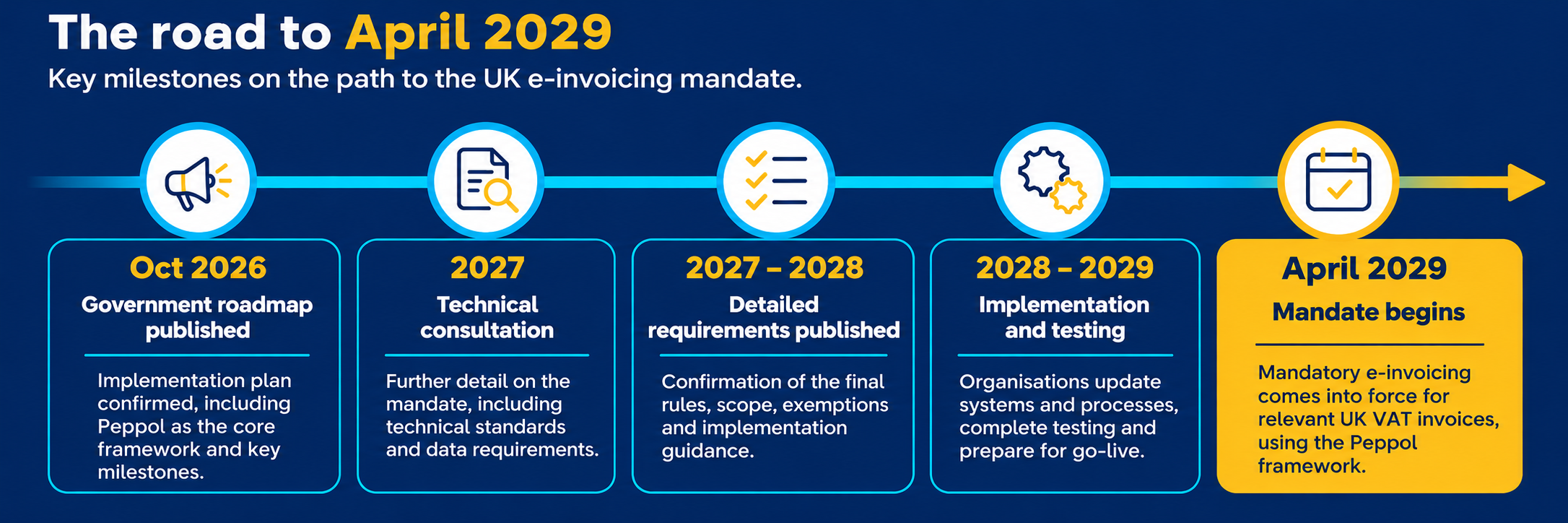
The timeline presents a particular challenge for organisations undertaking major finance technology programmes. It creates a potential sequencing challenge. Organisations may already be designing, implementing or transitioning to new ERP environments when the final compliance requirements become available.
The opportunity is to anticipate those requirements within the architecture today, without prematurely committing to unconfirmed technical specifications.
What does this mean for your organisation?
Compliance is not just a tax or finance issue. It’s a technology and process challenge.
Mandatory e-invoicing will have implications across Accounts Payable, Accounts Receivable, Finance, Procurement and IT. Organisations will need to understand how their systems generate, receive, validate and process structured invoices, and how they connect with customers, suppliers and external networks.
For those operating multiple ERP platforms, international entities or fragmented finance systems, the challenge may be more complex.
Key considerations include:
- ERP and finance systems: Can your existing platforms support structured invoice data and the necessary integrations?
- AP and AR processes: How will electronic invoices be received, validated, matched, approved and issued?
- Compliance and connectivity: What additional services or capabilities will be needed to support the UK’s Peppol-based framework?
- Technology transformation: Are current ERP upgrades, AP automation investments and finance transformation programmes considering the emerging requirements?
The important point is that moving to a new ERP platform or investing in AP automation does not automatically guarantee e-invoicing compliance. The entire invoice process and supporting architecture need to be considered.
Choosing the right technology approach.
Your ERP is part of the answer. But it may not be the complete solution. There is no single technology approach that will suit every organisation.
Some may be able to meet the requirements through their existing ERP or finance platforms, potentially supported by additional compliance and connectivity services. Others may benefit from a dedicated AP automation or e-invoicing solution that provides structured invoice exchange, regulatory compliance capabilities and integration across multiple ERP environments.
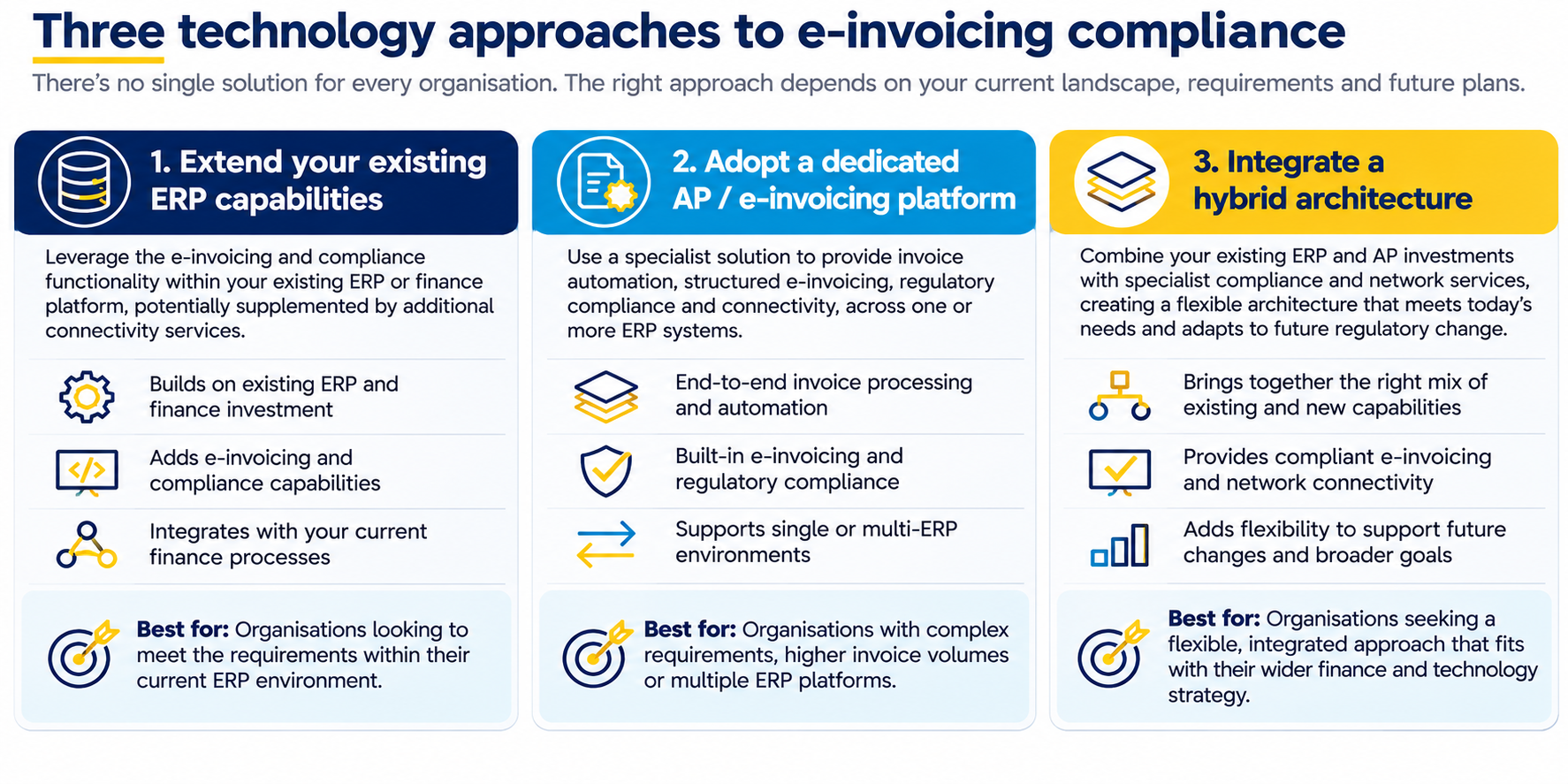
The right approach depends on your existing technology landscape, invoice volumes, geographical footprint and wider finance transformation strategy.
The priority today is not to implement against requirements that have yet to be finalised, but to avoid making technology decisions that could create additional complexity, cost or compliance risk tomorrow.
How excelerated can help…
Make informed decisions today. Be ready for compliance tomorrow.
At excelerated, we help organisations understand the implications of emerging regulatory requirements for their existing finance processes and technology architecture.
Our experience across ERP platforms, AP automation, e-invoicing and specialist technology solutions enables us to take a technology-agnostic approach, identifying the most appropriate combination of capabilities for each organisation.
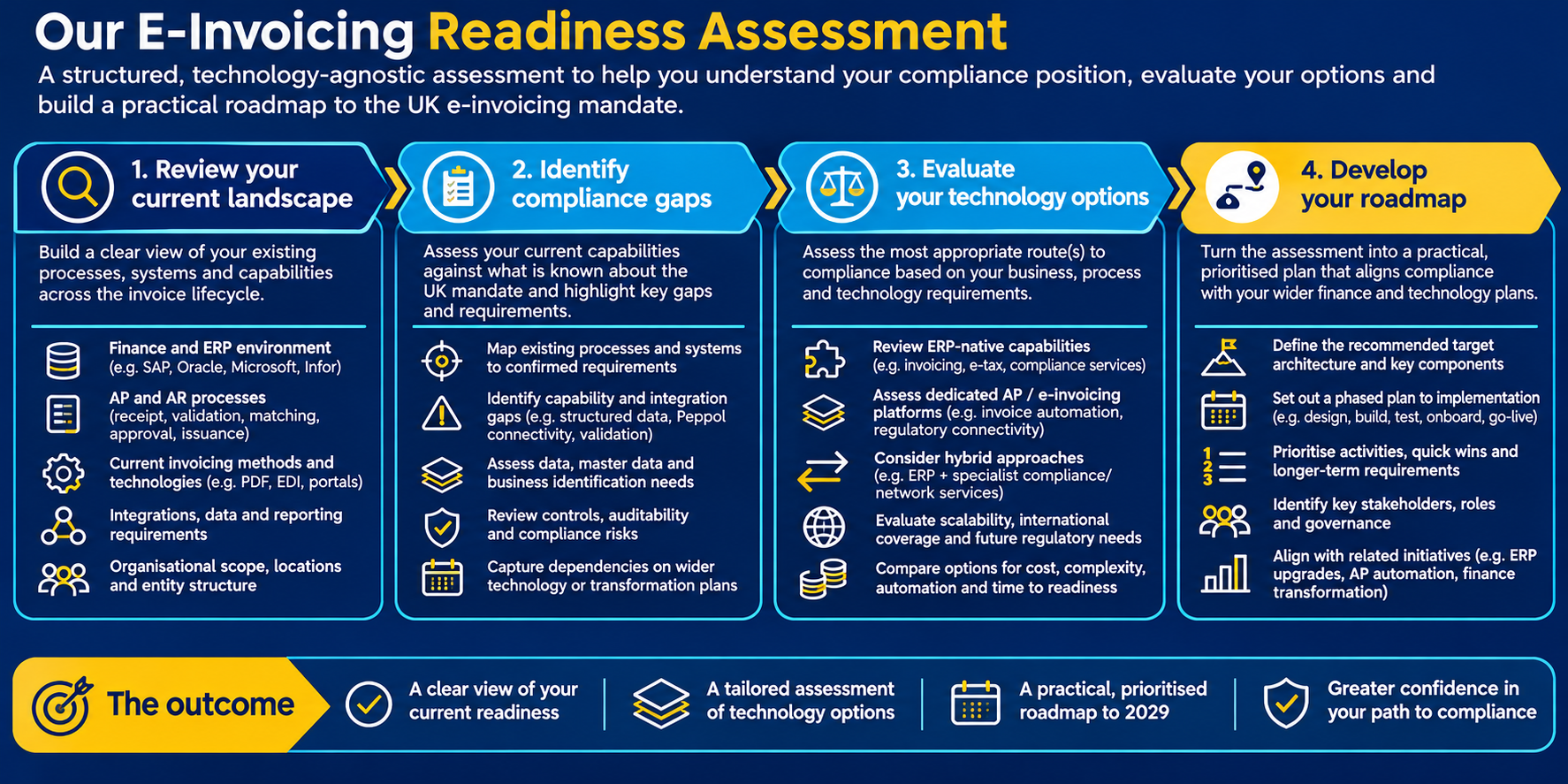
Through an E-Invoicing Readiness Assessment, we can help you:
- Review your existing ERP, AP and invoicing landscape.
- Identify potential compliance gaps and technology dependencies.
- Evaluate native ERP, specialist e-invoicing and AP automation options.
- Develop a practical technology roadmap aligned to the 2029 mandate and your wider transformation plans.
Is your finance technology strategy ready for 2029?
Whether you’re planning a technology transformation or simply want to understand your current position, we can help you assess your options and identify the right next steps.
