Key Challenges Faced Within Accounts Payable Teams
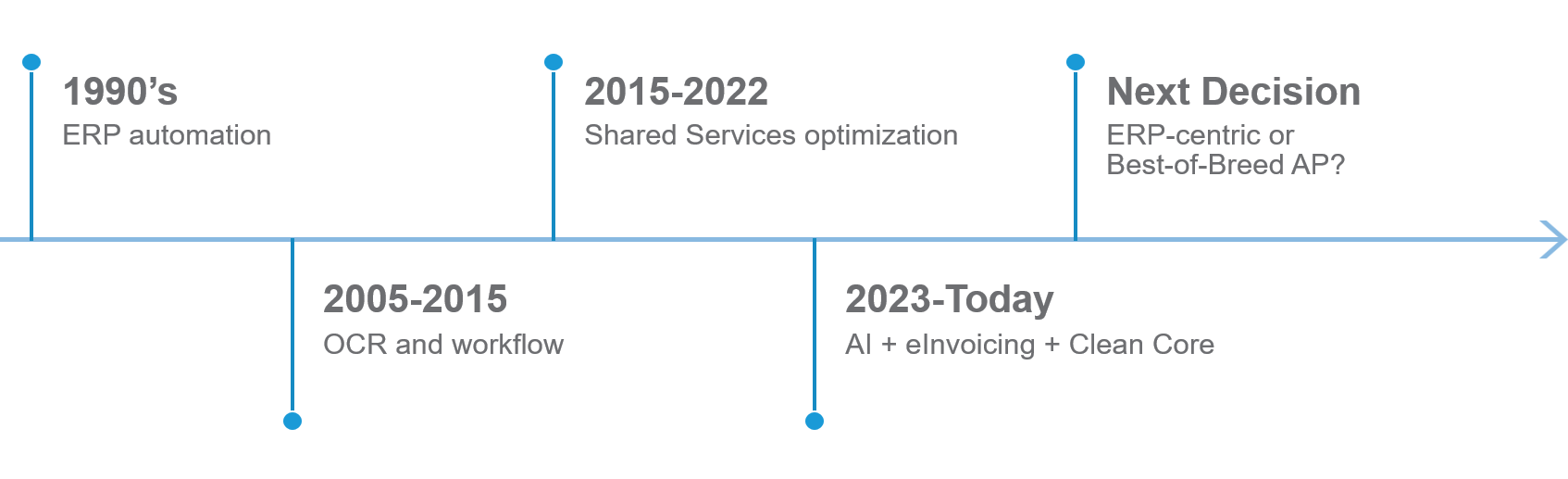
The following challenges highlight the key priorities shaping the future of AP:
1. Global eInvoicing Mandates
2. AI Expectations
Organisations expect AP teams to leverage AI to automate manual tasks, improve accuracy, accelerate invoice processing, and deliver actionable insights. However, many teams struggle with legacy systems, poor data quality, and limited resources, making it challenging to realise AI’s full potential while managing expectations for rapid transformation.
3. Increasing Compliance
AP teams face expanding regulatory requirements covering tax, fraud prevention, audit readiness, data privacy, ESG reporting, and financial controls. Keeping pace with evolving legislation across different countries requires robust governance, consistent processes, and reliable documentation, placing significant pressure on already stretched finance teams.
4. Shared Services Productivity
5. ERP Consolidation
Many organisations are consolidating multiple ERP systems following mergers, acquisitions, or global transformation programmes. AP teams must harmonise processes, migrate data, and maintain business continuity during complex implementations, while ensuring consistent controls, reporting, and supplier experiences across the new technology landscape.
6. Clean Core Strategy
Building the Right Technology Architecture for a Future-Ready AP Function
Many SAP customers have successfully completed their migration to S/4HANA. The next strategic decision is not about ERP – it’s about which business capabilities should remain inside ERP, and which should become specialist platforms.
Accounts Payable is one of the first areas where organisations are asking this question.
Accounts Payable teams are under increasing pressure to improve efficiency, enhance supplier experiences, strengthen compliance, and adopt new digital capabilities. Achieving these goals requires careful consideration of technology architecture – particularly the relationship between AP processes, ERP platforms, and specialised automation solutions.
Rather than simply asking where AP should sit, organisations must determine the right balance between core ERP functionality and flexible innovation platforms.
Should invoice processing remain inside ERP?
Traditionally, invoice processing has been embedded within ERP systems to provide control, visibility, and integration with financial processes. However, as invoice volumes increase and automation expectations grow, organisations should consider whether ERP alone can deliver the agility and innovation required.
Keeping invoice processing within ERP can provide strong governance, seamless integration with financial data, and simplified ownership. However, highly customised ERP workflows can create complexity, slow innovation, and increase dependency on ERP release cycles. Many organisations are now adopting a hybrid approach, where core financial controls remain within the ERP while specialised AP capabilities enhance automation, intelligence, and user experience.
Should AP innovation be decoupled from ERP upgrades?
ERP transformation programmes often take years to complete, while AP teams need continuous improvements in automation, compliance, and supplier engagement. Relying entirely on ERP upgrades to deliver AP innovation can limit agility and delay value.
Decoupling AP innovation from ERP upgrade cycles allows organisations to adopt new technologies – such as AI-powered invoice automation, advanced analytics, and intelligent workflow capabilities – at the pace the business requires. A modular architecture with well-defined integrations enables AP teams to innovate independently while maintaining alignment with the broader ERP strategy.
What belongs in SAP S/4HANA?
For organisations using SAP S/4HANA, the ERP should remain the system of record for core financial processes and controls. Capabilities that require strong financial governance, transaction integrity, and integration with accounting processes are typically best managed within S/4.
This includes areas such as supplier master data governance, accounting postings, payment execution, tax determination, financial controls, and reporting. Keeping these capabilities within the ERP ensures consistency, auditability, and alignment with enterprise-wide finance operations.
What belongs outside SAP S/4HANA?
Not every AP capability needs to reside within the ERP. Solutions that require rapid innovation, specialised functionality, or frequent updates may be better positioned outside S/4 while integrating seamlessly with core finance processes.
Examples include intelligent invoice capture, AI-driven document understanding, supplier collaboration portals, workflow optimisation, analytics platforms, and emerging automation technologies. By extending rather than heavily customising the ERP, organisations can maintain a cleaner core while benefiting from faster innovation and easier adoption of new capabilities.
Creating the right balance
The most effective AP technology architecture is not about choosing between ERP and external solutions – it’s about defining the right responsibilities for each. A well-designed ecosystem allows the ERP to provide stability, control, and financial integrity, while enabling specialised platforms to drive automation, intelligence, and continuous improvement.
By making deliberate architecture decisions, AP teams can build a future-ready operating model that supports efficiency today while remaining adaptable to tomorrow’s regulatory, technological, and business demands.
What can be achieved with true Automation?

How AI and Machine Learning Are Enabling Touchless Invoicing
AI-assisted coding
AI-assisted coding uses machine learning models to analyse invoice data, historical transactions, and business rules to automatically suggest or apply accounting codes. By learning from previous coding decisions, AI can improve accuracy, reduce manual effort, and accelerate invoice approvals. This enables AP teams to handle higher volumes while maintaining consistency and compliance across financial processes.
Prescriptive analytics
While traditional analytics explain what has happened, prescriptive analytics uses AI to recommend what should happen next. For AP teams, this can include prioritising invoices, identifying optimal approval paths, and recommending actions to improve process performance. These insights help organisations proactively manage workflows, improve efficiency, and make better operational decisions.
Predictive payment risk
Machine learning can analyse payment patterns, supplier data, invoice behaviour, and external factors to predict potential risks before they occur. AP teams can identify duplicate invoices, potential fraud, supplier payment issues, or cash flow risks earlier. These predictive capabilities strengthen controls while helping organisations optimise working capital and supplier relationships.
AI-generated workflow recommendations
AI can analyse process performance and recommend improvements to invoice workflows, approval routing, and resource allocation. By identifying bottlenecks, unnecessary steps, or inefficient approval paths, AI helps AP teams optimise operations continuously. These recommendations enable organisations to create smarter workflows that adapt to changing business needs.
Autonomous exception resolution
Exceptions are one of the biggest barriers to achieving touchless invoicing. AI can identify the root cause of invoice issues, recommend corrective actions, and in some cases resolve exceptions automatically. By analysing historical resolution patterns and applying predefined rules, AI reduces manual intervention, shortens processing times, and allows AP teams to focus on more complex issues requiring human judgement.
Natural language AP queries
AI-powered natural language interfaces allow users to interact with AP systems using simple questions rather than navigating complex reports or screens. Finance teams can ask questions such as invoice status, payment timing, supplier trends, or outstanding liabilities and receive immediate answers. This improves visibility, reduces reliance on manual reporting, and enables faster decision-making.
Continuous learning
A key advantage of AI and machine learning is the ability to continuously improve over time. As more invoices are processed and more decisions are made, AI models learn from outcomes and refine their recommendations. This creates a self-improving AP environment where automation accuracy increases and manual intervention gradually decreases.
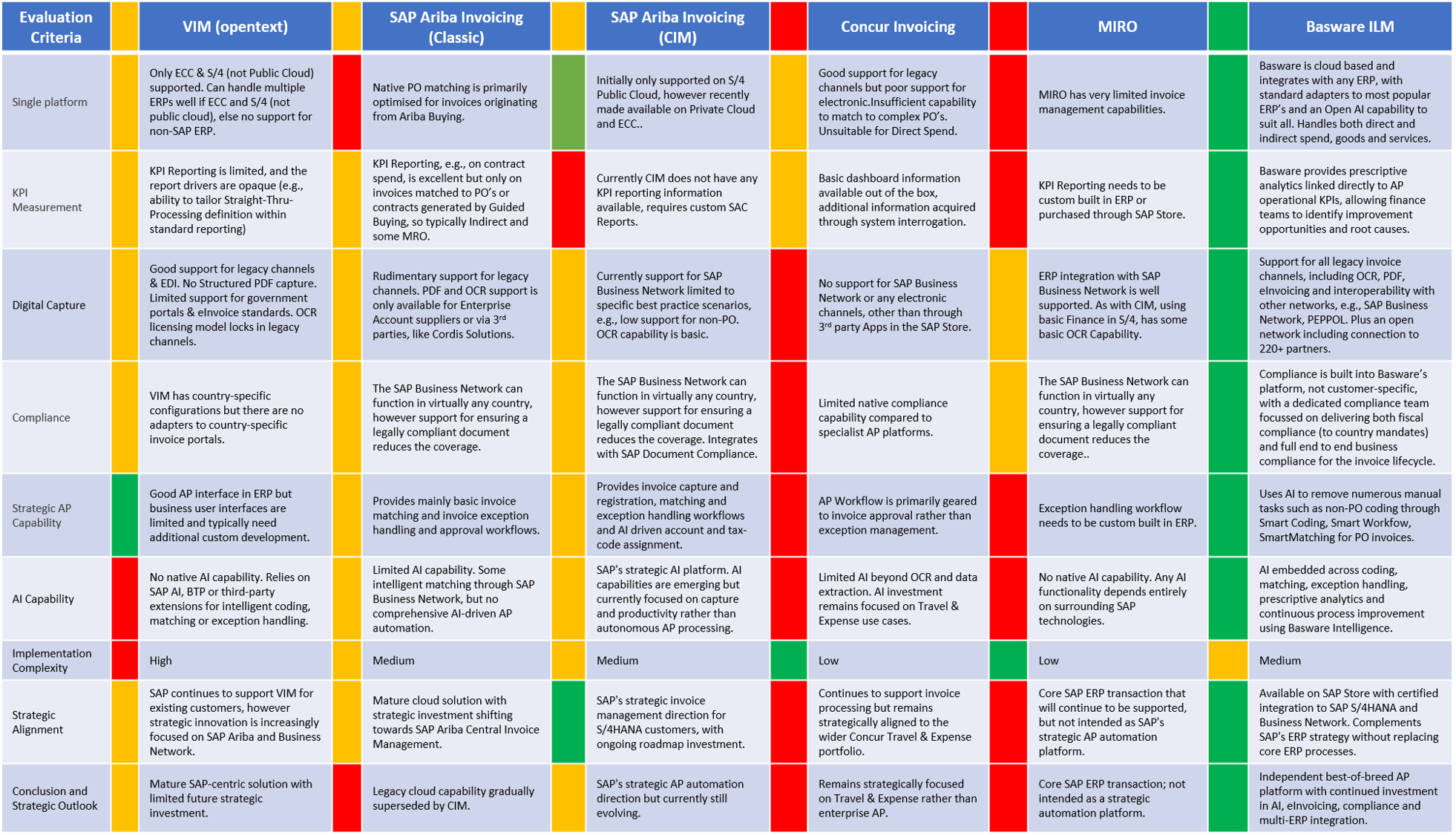
Enterprise AP Automation Options for SAP ERP Customers
This comparison provides a structured view of their respective strengths and capabilities, helping organizations identify the solution that best aligns with their business requirements and strategic objectives.
Green = Strong Fit Amber = Partial Fit Red = Poor Fit
excelerated’s Accounts Payable (AP) Diagnostic
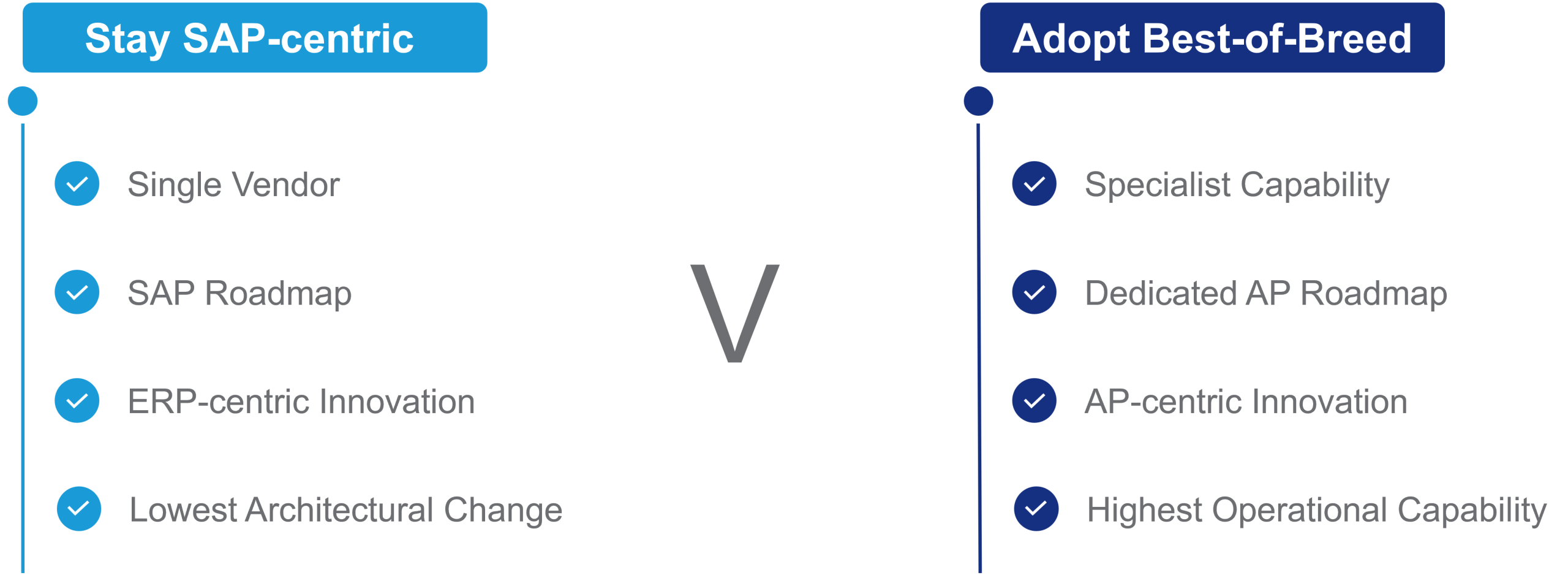
The Strategic Decision
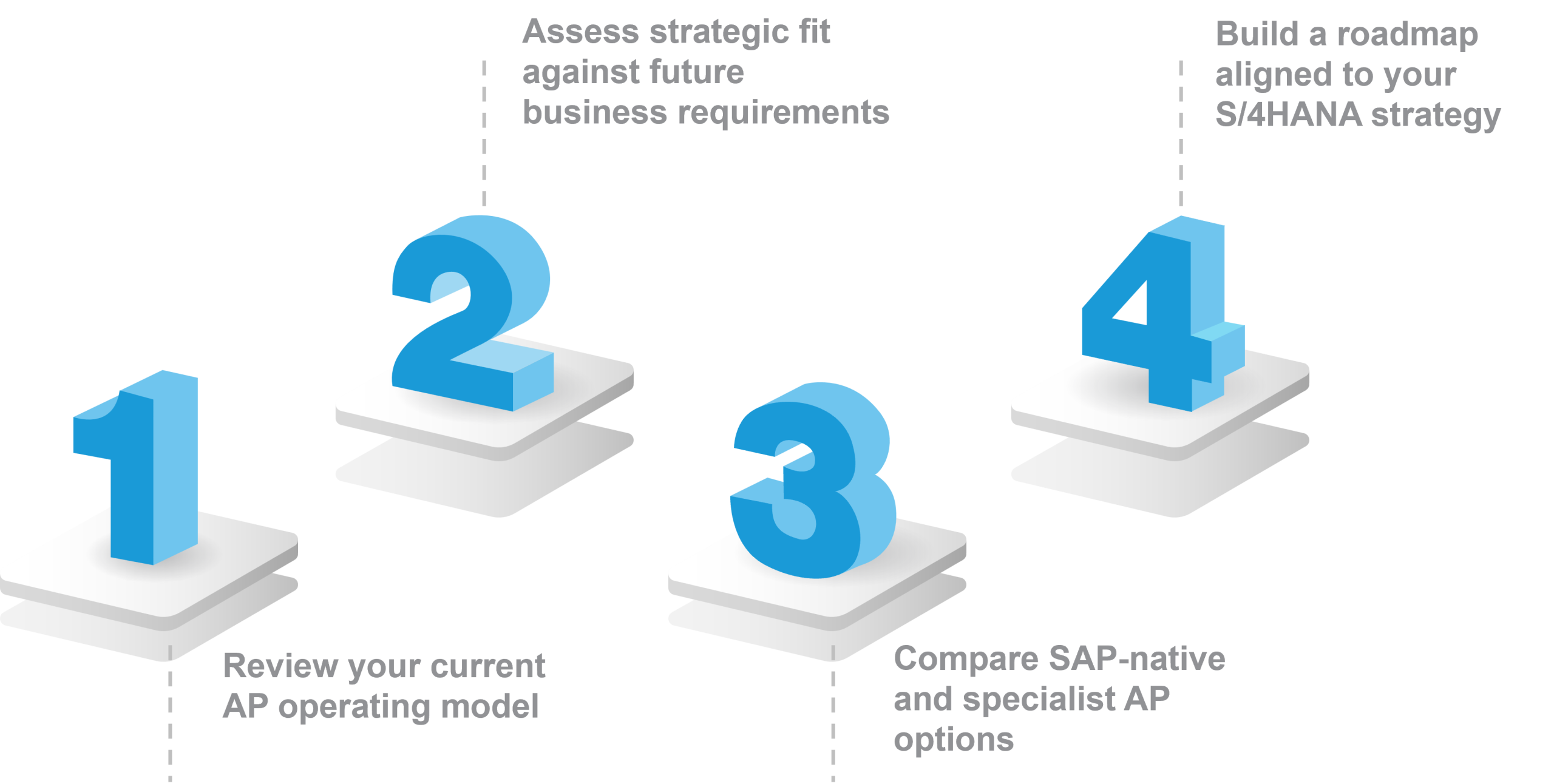
Recommended Next Steps
Got any questions? Contact me.